CRAFT
The knife and the counter
A cook's work lives with its tools.
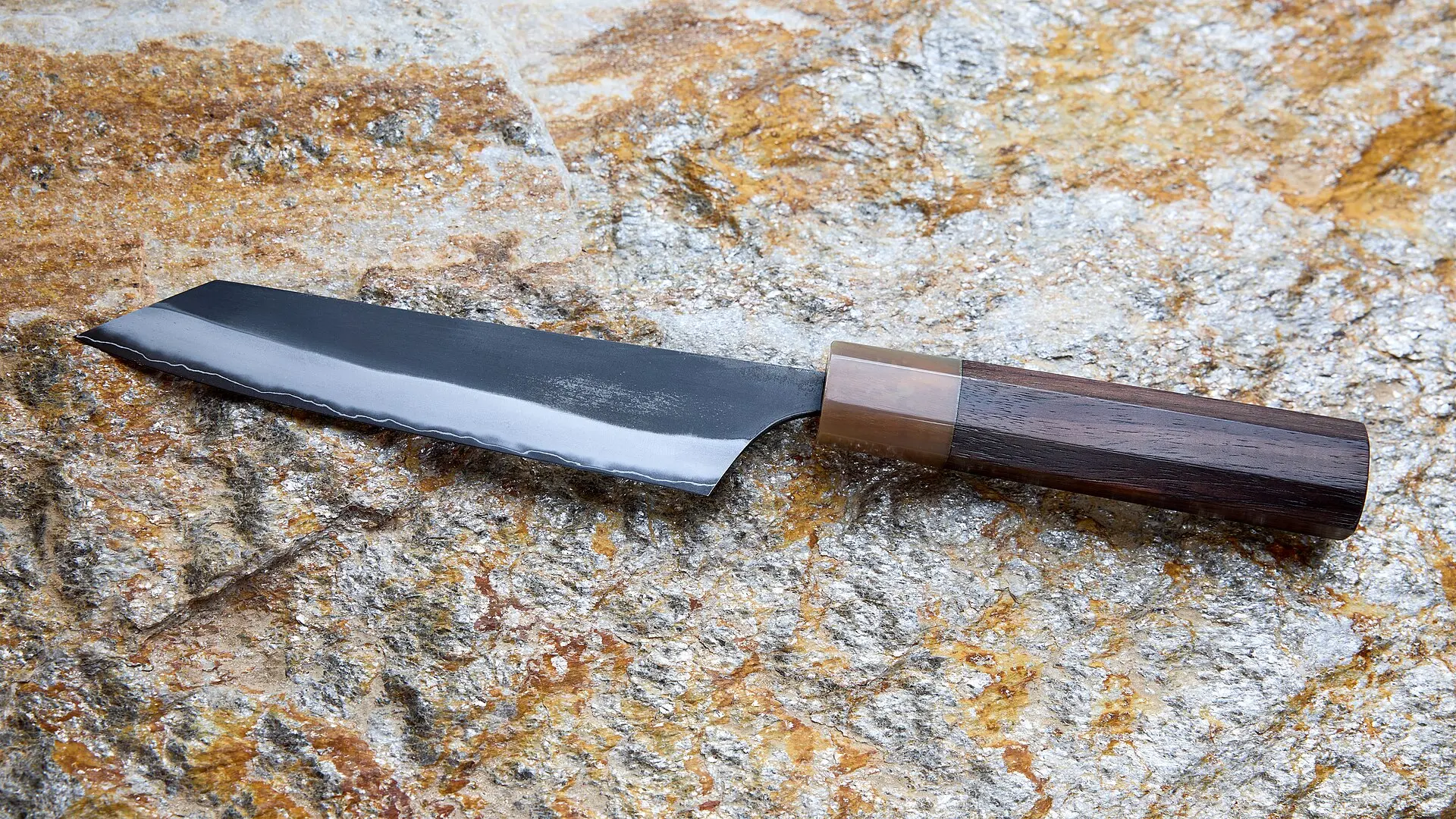
Japanese kiritsuke-style petty knife by Masashi, photographed as a single object — Photo: Frank Schulenburg / CC BY-SA 4.0 / Wikimedia Commons
Japanese kitchen knives come in forms for each task — yanagiba, deba, usuba. Slicing fish, cutting through bone, peeling vegetables: each job has its blade.
Sakai in Osaka, Seki in Gifu and Echizen in Fukui are known as centres of blade-making.
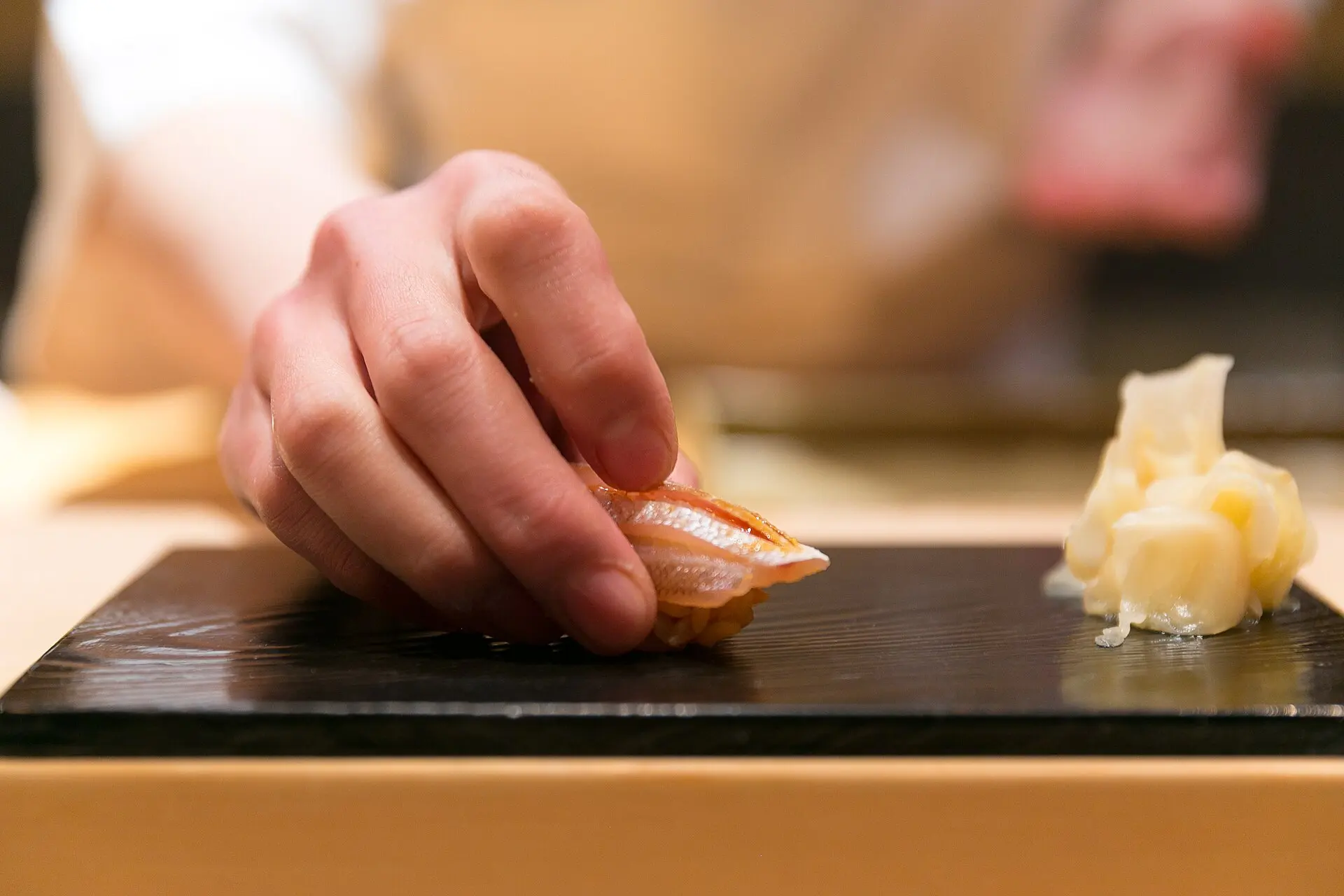
The counter is where this work happens in front of the guest. Across a single board, the movement of the cook's hands leads directly to the plate.
Further reading
Photo credits
Japanese kiritsuke-style petty knife by Masashi, photographed as a single object
Photographer / creator
Frank Schulenburg
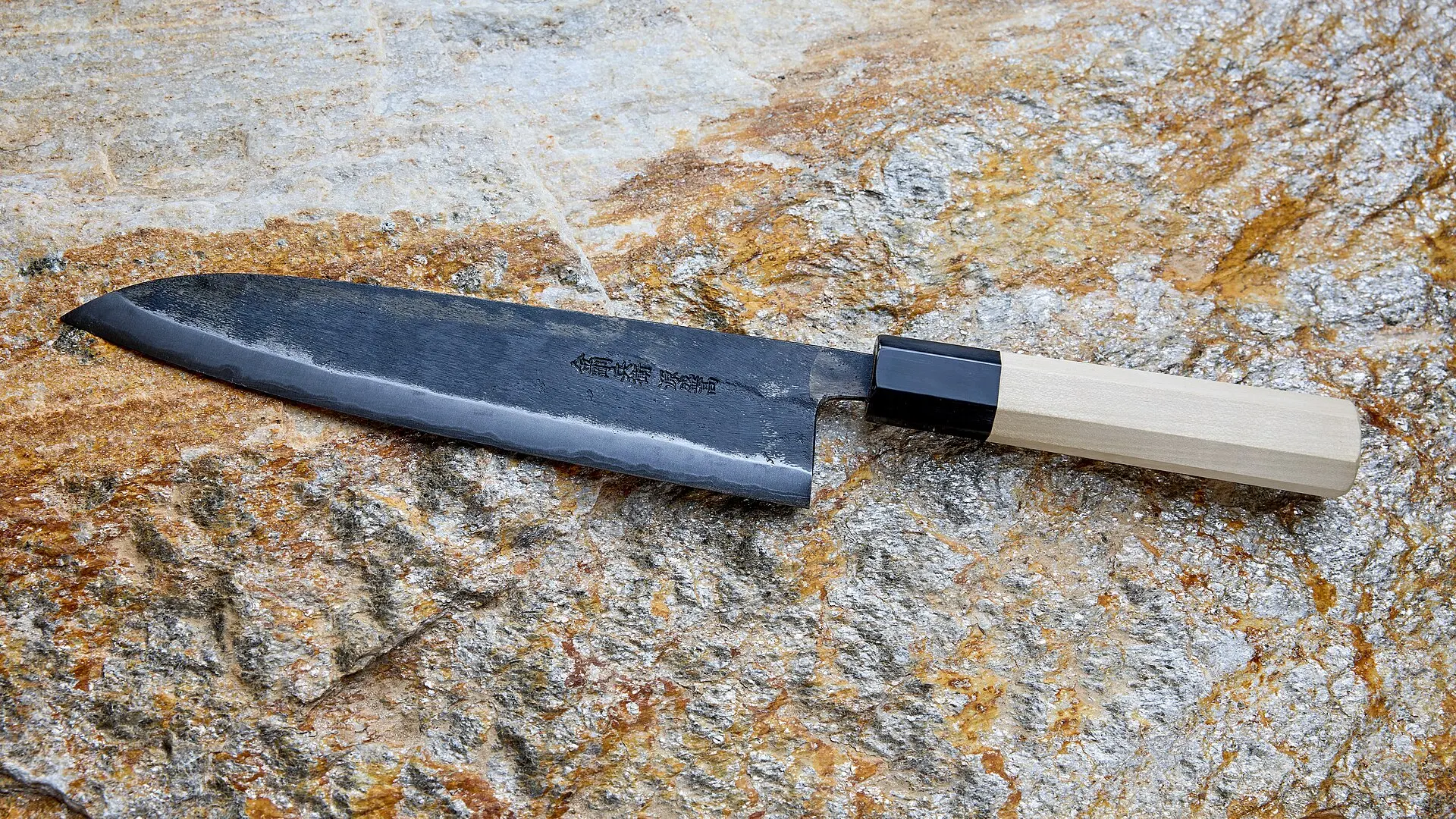
Hand-forged Aogami Super carbon-steel gyuto chef’s knife by Moritaka Hamono
Photographer / creator
Frank Schulenburg
Source / licence
Wikimedia Commons · CC BY-SA 4.0
Frank Schulenburg, CC BY-SA 4.0, via Wikimedia Commons
Displayed with colour adjustment
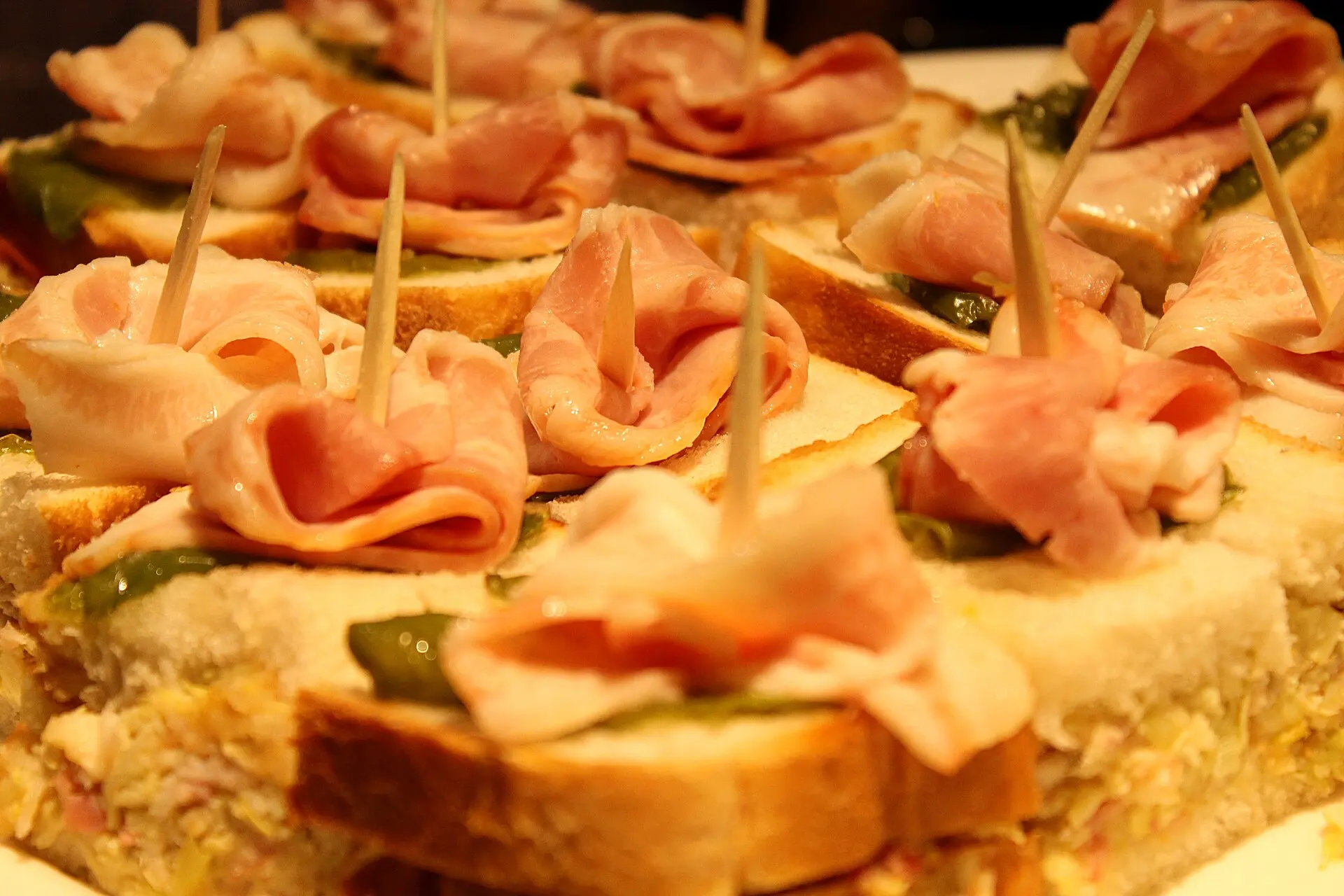
Basque pintxos on a bar counter in Donostia–San Sebastián
Donostia–San Sebastián, Spain
Photographer / creator
Nicolas Vollmer from Munich [Allemagne]
Source / licence
Nicolas Vollmer from Munich [Allemagne], CC BY 2.0, via Wikimedia Commons
Displayed with colour adjustment
A sushi chef’s hands presenting kasugodai (young sea bream) nigiri at Sushi Tokami, Tokyo
Sushi Tokami, Tokyo
Photographer / creator
City Foodsters
Source / licence
City Foodsters, CC BY 2.0, via Wikimedia Commons
Displayed with colour adjustment